

Myopia is a common eye condition that affects the ability to see distant objects clearly. It occurs when light rays are focused in front of the retina rather than directly on it, resulting in a blurred image. This article explores myopia symptoms, its effect on visual acuity—especially at night—and the role of the visual simulator in understanding the condition. The simulator is purely illustrative and does not replace a complete ophthalmological examination.
How a myopic person sees at a distance

Myopia affects the ability to distinguish distant objects clearly, with the impact varying according to severity. Understanding how myopia manifests and which correction options are available is essential for improving visual acuity and quality of life. For a correct diagnosis tailored to each case, an ophthalmological examination is recommended, especially when myopia is suspected to have begun in children.
Symptoms of myopia
People with myopia experience blurred vision at a distance. Other associated manifestations may also occur and may vary in intensity according to the severity of the refractive error:
| Symptom | Manifestation |
|---|---|
| Vision | Blurred at a distance |
| Other | Eye fatigue, strabismus, headaches |
Symptom intensity increases as myopia progresses, requiring appropriate correction with prescription glasses or contact lenses.
Blurred vision at a distance
The main symptom of myopia is blurred vision of distant objects. The blurring occurs because light rays focus in front of the retina rather than directly on its surface, where a clear image normally forms. The higher the prescription (minus diopters), the greater the impairment of distance vision. Correct glasses or contact lenses allow light rays to focus properly on the retina, restoring image clarity.
Types of myopia
There are different types of myopia, classified according to severity, progression, and causes:
- Simple myopia, the most common form, usually appears in childhood or adolescence and stabilizes in adulthood. It is generally not associated with major ocular complications.
- High myopia (or severe myopia), a severe form that can lead to serious ocular complications (retinal detachment, macular degeneration, or glaucoma).
- Progressive myopia worsens over time and requires constant ophthalmological monitoring. An ophthalmological examination can determine the specific type and the best treatment methods.
At night: contrast and light
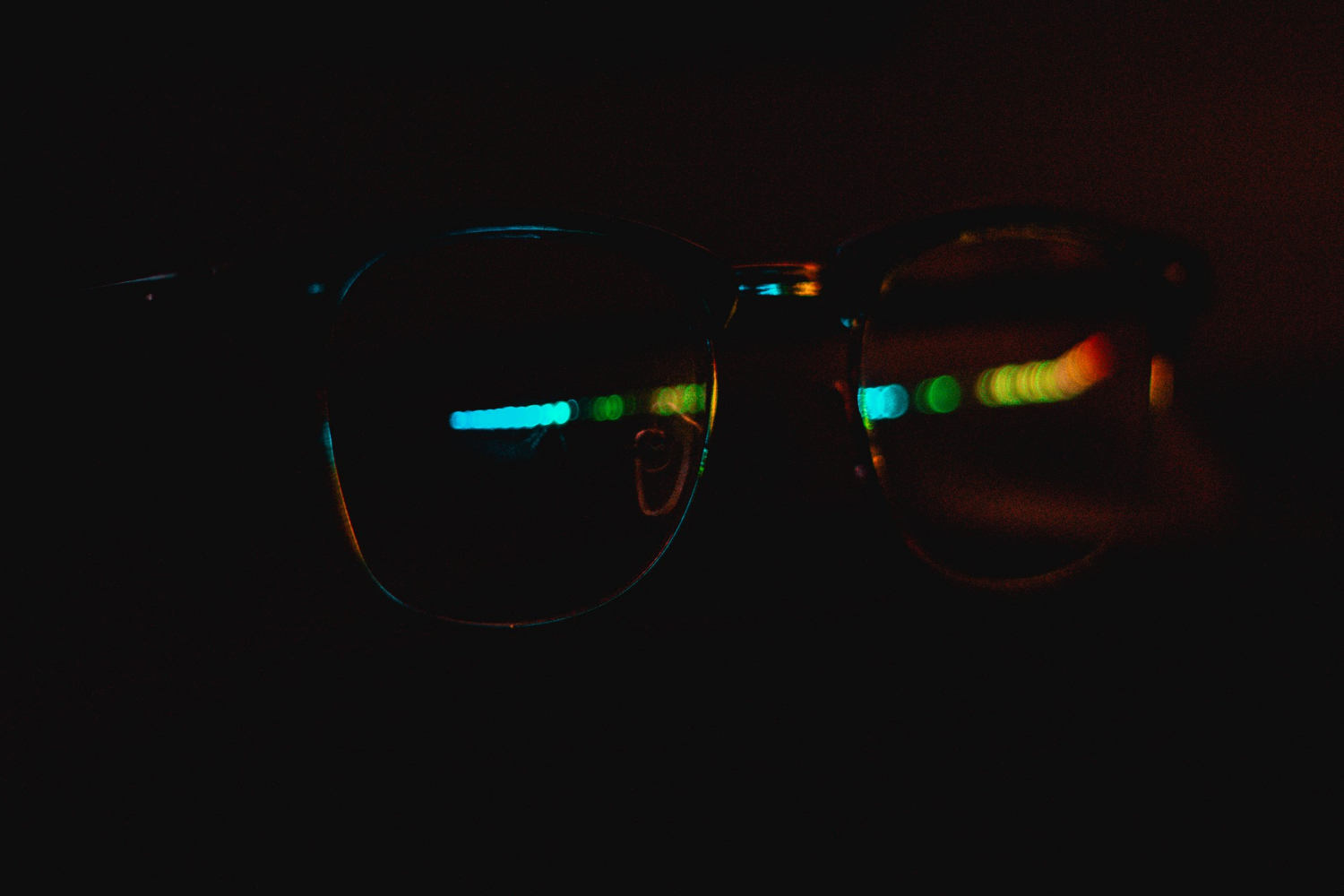
Myopic vision is even more affected at night because the eye processes low light differently. In darkness, visual adaptation is slower and contrast sensitivity is reduced, which may cause difficulty with orientation, night driving, or other activities requiring precise visual perception. To improve night vision, glasses with an anti-reflective treatment may be worn; they reduce stray-light effects (reflections and halos) and may improve image clarity in low light.
Impact of light on vision
Light plays a crucial role in forming the visual image, and myopia may influence how the eye adapts to different illumination levels. In low light, the pupil dilates to admit more light, but this can increase optical aberrations and the perception of halos (bright rings around light sources), affecting night-vision clarity. Appropriate optical correction, rest, and supplements recommended by the ophthalmologist may improve vision.
Contrast and night-vision difficulties
People with myopia may have difficulty perceiving contrast in low-light conditions, making it difficult to distinguish the outlines of objects and affecting visual orientation and safety during activities such as driving at night. To alleviate these difficulties, it is recommended to use prescription glasses with special lens treatments, such as anti-reflective coatings, which reduce glare produced by artificial light sources (headlights, road signs, and public lighting).
Night vision in myopic people
Myopic people may experience reduced visual acuity at night. They may notice halos around light sources and increased sensitivity to glare. Associated astigmatism may aggravate these problems. An ophthalmologist may recommend special lenses or treatments to improve night vision.
5 surprising things about how a myopic person sees

Distorted vision during the day
People with myopia may experience not only blurred distance vision but also image distortions during the day. In bright light, object outlines may appear blurred or less defined. Strong contrast between light and shadow can affect how the brain processes visual information, so even apparently ideal lighting may produce a less clear image and affect everyday activities such as driving, reading distant signs, or recognizing distant faces.
Difficulty adapting to light
People with myopia may have difficulty adapting quickly to sudden changes in light. Moving from a brightly lit environment into a darker space may cause a significant delay in visual adjustment. Small details may be difficult to notice, and this may cause temporary visual discomfort and a reduced ability to orient themselves, requiring caution during activities such as driving.
Altered night vision
At night, myopic people may experience a significant decrease in visual acuity compared with people with normal vision. The combination of the refractive error and the natural reduction in illumination makes details harder to distinguish. Headlight glare and other light sources may cause temporary dazzle, making objects appear more diffuse and making night driving more difficult.
A different perception of colors
A less widely known aspect is that people with myopia may perceive colors differently from those with normal vision. Although myopia does not directly affect the function of the photoreceptor cells responsible for color perception (cone cells), blurred vision can make it difficult to distinguish subtle shades, especially when objects are at a distance. For example, a person with myopia might confuse colors that are similar in tone, which may influence clothing choices or even artistic activities. This limitation is not caused by color blindness or a true deficiency in color perception, but by the fact that the blurred image reduces the ability to distinguish by color between objects at a distance.
Long-term effects on the brain
Recent studies suggest that myopia may affect not only visual quality but also the way the brain processes visual information. People with myopia may develop certain visual “habits,” learning to focus on nearby details, which may lead to a reduction in the efficiency of the visual cortex in processing images from a distance. This translates into a subconscious adaptation to distance vision, and in the long term, the brain may become less efficient at processing clear images from a distance, which may affect daily activities and quality of life.
Vision simulator: usefulness and limitations

What is a vision simulator?
A vision simulator is a digital tool or application that attempts to imitate how a person with myopia perceives the surrounding world. It modifies images to simulate blurred distance vision that a person with myopia experiences. The simulator can help in understanding the impact of myopia on vision and in visualizing the difference between uncorrected vision and vision corrected with glasses or contact lenses. It is important to emphasize that the simulator has an educational and informational role, but it does not replace a specialized ophthalmological examination. Its main purpose is to increase awareness of the importance of correcting refractive errors and regularly monitoring eye health.
Who can benefit from a vision simulator?
It is useful for people with vision problems, including myopia, helping them understand how they perceive the world. It may also help ophthalmology professionals explain how eye conditions affect vision. The technology supports patient education and may improve understanding of vision problems and treatment options.
Limitations of the simulator
It is important to be aware of its limitations. It provides only a simulation and cannot reproduce each person’s experience accurately. It cannot assess eye health, diagnose associated conditions (e.g., astigmatism, presbyopia, or retinal conditions), or determine the exact prescription required. The simulator does not replace a complete ophthalmological examination by a specialist.
Correct use
A simulator generally requires no traditional maintenance because it is an online or mobile application. Understand that it is educational, not diagnostic. Adjust settings to estimated prescription values if possible, but do not self-diagnose or change prescribed treatment. Use it as an educational tool, not a substitute for a personalized examination.
When to seek an examination
Warning signs of myopia
Clinical signs that may indicate myopia should prompt an ophthalmological examination:
| Visual Symptoms | Other Symptoms |
|---|---|
|
|
If these symptoms occur, especially in children, request a complete evaluation. Early detection allows early optical correction and monitoring of progression, preventing long-term complications.
Importance of medical evaluation
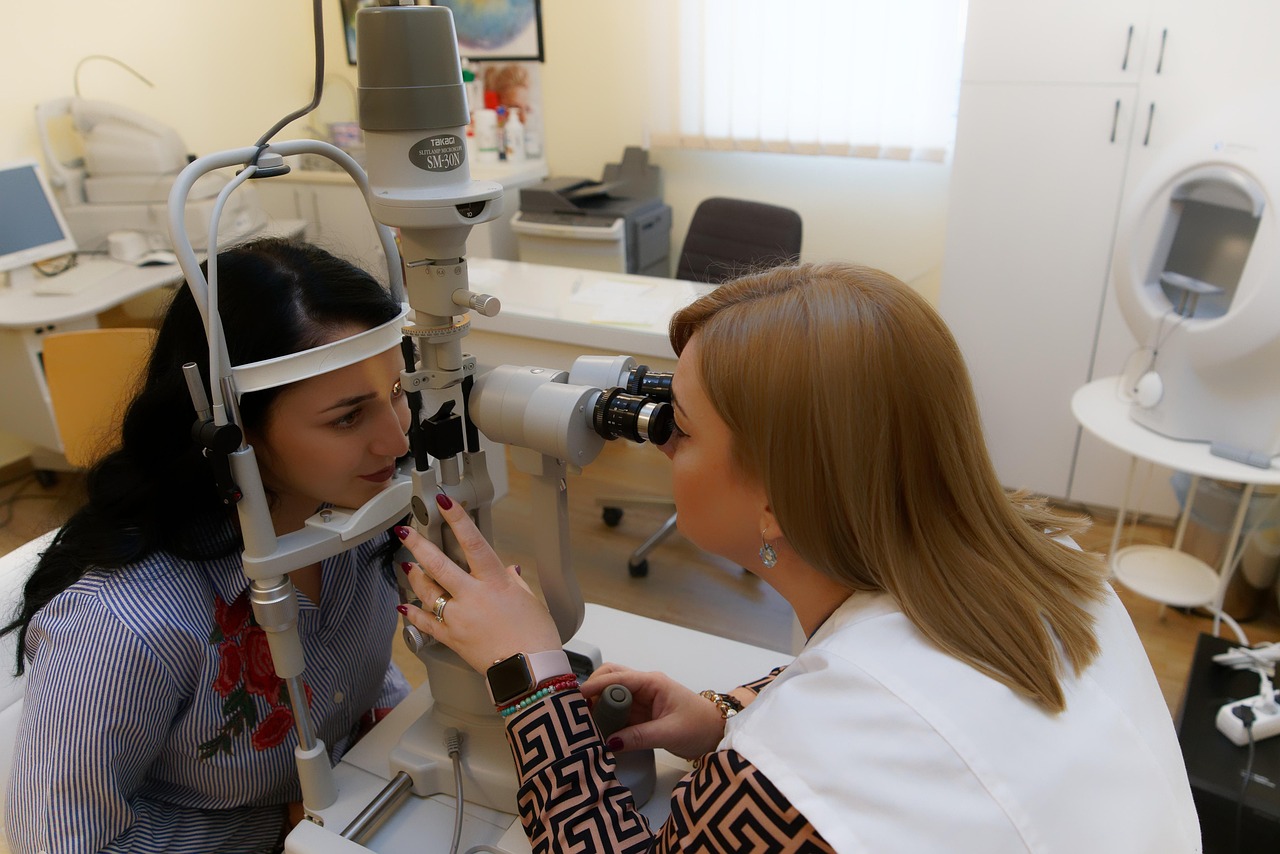
A complete ophthalmological evaluation by an ophthalmologist is crucial for correctly diagnosing myopia and excluding other eye conditions. It includes visual-acuity measurement, refraction, fundus examination, and assessment of general ocular health. These investigations determine the degree of myopia, identify possible associated conditions, and establish correction or treatment. Do not postpone an examination if you have concerns about your vision.
What to expect
The ophthalmologist will perform investigations, ask about your medical history, current symptoms, and family history of myopia or other eye conditions, determine the required prescription, and discuss glasses, contact lenses, or refractive surgical procedures if eligible. You will also receive advice and methods for protecting vision and preventing progression, particularly in children.
Correction options

Corrective therapeutic contact lenses
Several corrective optical lenses are available for myopia correction. The ophthalmologist may prescribe diverging lenses that focus light correctly on the retina. Contact lenses offer a wider field of vision, discreet appearance, and greater freedom of movement. The choice depends on preferences, lifestyle, and medical recommendations.
Glasses for myopic people
Prescription glasses are a simple and effective solution for correcting myopia. Diverging lenses project the image correctly onto the retina. Options include single-vision lenses for distance and progressive lenses for distance and near vision. Selection should consider the required prescription and aesthetic preferences. Glasses are safe, comfortable, and non-invasive.
Innovative treatment methods
In addition to optical correction with glasses and contact lenses, there are innovative treatment methods for correcting myopia. These include refractive surgical procedures, such as LASIK (Laser-Assisted In Situ Keratomileusis) and PRK (Photorefractive Keratectomy), which reshape the cornea to correct the refractive error. Another modern option is orthokeratology (a non-surgical method), which uses special contact lenses worn at night to temporarily reshape the cornea. The ophthalmologist can assess the patient’s eligibility for these methods and provide detailed information about their benefits and risks. Remember that these methods correct vision but do not cure myopia.
Frequently asked questions

Can the simulator replace an examination?
Absolutely not. Although a vision simulator can be a useful tool for understanding how a person with myopia perceives the world, it cannot replace an ophthalmological examination performed by an ophthalmologist. A complete examination includes a detailed assessment of eye health, precise measurement of the prescription, and identification of other associated eye conditions. The simulator cannot provide an accurate diagnosis or a personalized treatment plan. A periodic ophthalmological examination is essential to ensure appropriate optical correction, for monitoring the progression of myopia, and for maintaining long-term visual health.
When should I repeat testing?
Repeat vision testing at least every two years, even without significant changes. People wearing glasses or contact lenses may need a more frequent monitoring schedule. Children and adolescents should be tested annually because myopia may progress rapidly during growth. Reduced acuity, frequent headaches, or other symptoms require immediate scheduling of an examination.
What are common causes?
Myopia is determined by a combination of genetic and environmental factors. If one or both parents are myopic, the risk that the child will also develop myopia is significantly increased. Environmental factors, such as spending time in indoor spaces, prolonged use of electronic devices, or activities involving near focusing (reading, writing, etc.), may contribute to the development of myopia, especially in children. Studies suggest that spending time outdoors and exposure to natural light may reduce the risk of myopia onset and progression. A balanced lifestyle and regular ophthalmological checkups are important for maintaining eye health.