What is dry eye syndrome?
Dry eye syndrome is a common eye condition characterized by reduced tear film quality or quantity. This problem occurs when the eyes do not produce enough tears, when tears evaporate too quickly, or when tear quality is impaired, affecting visual comfort and the health of the ocular surface.
Although often considered a minor discomfort, dry eye can significantly affect quality of life, causing difficulties with daily activities such as reading, working at a computer, or driving.
The role of the tear film
Tears are not just water. They form a complex tear film, consisting of three layers:
• mucin – adheres to the surface of the cornea and helps distribute tears evenly;
• aqueous – the thickest layer, responsible for transporting oxygen and nutrients, as well as protecting against harmful agents;
• lipid – the outer layer, which prevents excessive evaporation and reduces friction between the eyelids and the eye surface.
Any imbalance in these layers leads to the onset of dry eye.

Types of dry eye syndrome
Specialists classify the condition into two main forms:
• Hypolacrima – when the lacrimal glands produce too few tears;
• Dyslacrima – when tears evaporate excessively, making it the most common form.
Causes of dry eye syndrome
The factors that can contribute to dry eye syndrome are numerous:
• Aging – as the years pass, the lacrimal glands atrophy;
• Menopause and hormonal imbalances – particularly affect women;
• Wearing contact lenses – increases tear evaporation;
• Eyelid conditions – such as chronic blepharitis;
• Medications – antidepressants, antihistamines, antihypertensives, diuretics, etc.;
• Environmental factors – exposure to air conditioning, smoke, dust, high temperatures, or low humidity;
• Intensive visual activities – prolonged computer use, reading, or playing video games reduces blinking frequency;
• Eye surgery – which may alter the structures involved in tear secretion or distribution.
Diagnosis
The diagnosis of dry eye syndrome is relatively simple and non-invasive and includes:
• objective methods: paraclinical diagnosis (measurement of visual acuity, TBUT – the test that measures tear film breakup time, fluorescein staining of the tear film, FBUT, thermography, measurement of tear osmolarity, tear evaporation rate, etc.);
• subjective methods that assess the severity of the disease based on the frequency and number of symptoms experienced and reported by the patient (evaluation questionnaires, OSDI – OCULAR SURFACE DISEASE INDEX).
Symptoms:
The manifestations of dry eye syndrome vary, but the most common include:
• a gritty or foreign-body sensation in the eyes;
• burning and itching;
• sensitivity to light (photophobia);
• difficulty opening the eyelids in the morning;
• difficult or frequent blinking;
• blurred vision that improves after blinking;
• eye redness.
Symptoms may be aggravated by environmental factors such as wind, air conditioning, cigarette smoke, or pollution.
Therapeutic approach
The way dry eye syndrome is treated is determined by the severity and specific cause of the condition. In general, it includes:
• Artificial tears (eye drops or gels) with moisturizing and lubricating properties.
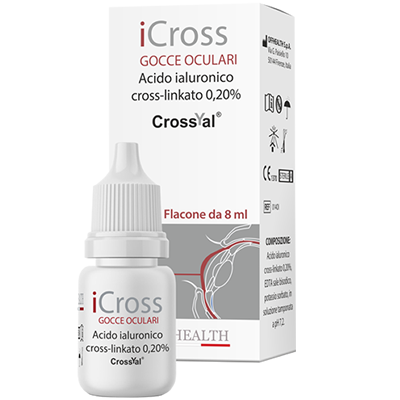
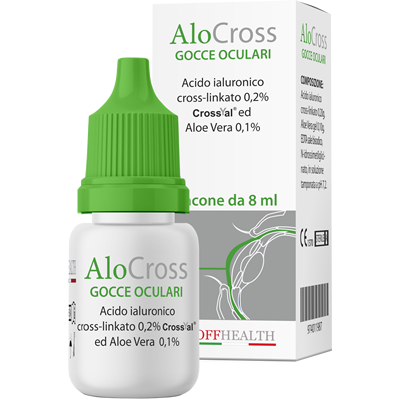
There is a wide variety of artificial tears, either simple or containing multiple active ingredients. The gold standard for tear replacement therapy is the use of hyaluronic acid, which not only lubricates the ocular surface but also promotes faster healing of corneal lesions and has anti-inflammatory properties. More recently, more stable forms of hyaluronic acid have appeared on the market, namely artificial tears with cross-linked hyaluronic acid, whose composition is six times more stable than that of ordinary hyaluronic acid, providing patients with longer retention on the eye surface, more intense lubrication, increased stability, and more pronounced healing of corneal lesions.
• Combined products with anti-inflammatory agents, when “red eye” is also present;
• Protective measures: regular breaks from computer use, air humidifiers, and avoiding direct exposure to drafts;
• Treatment of associated conditions (blepharitis, hormonal disorders, etc.);
• In more severe cases, the ophthalmologist may recommend advanced therapies or specific medical procedures.
Conclusion
Dry eye syndrome should not be ignored. Although it may initially seem like only a minor discomfort, if not properly treated it can lead to complications and reduced quality of life.
An ophthalmological consultation is essential for an accurate diagnosis and for establishing the appropriate treatment.