What is a chalazion?
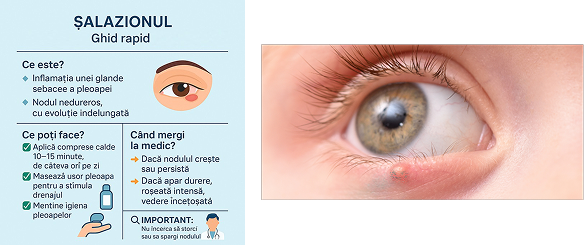
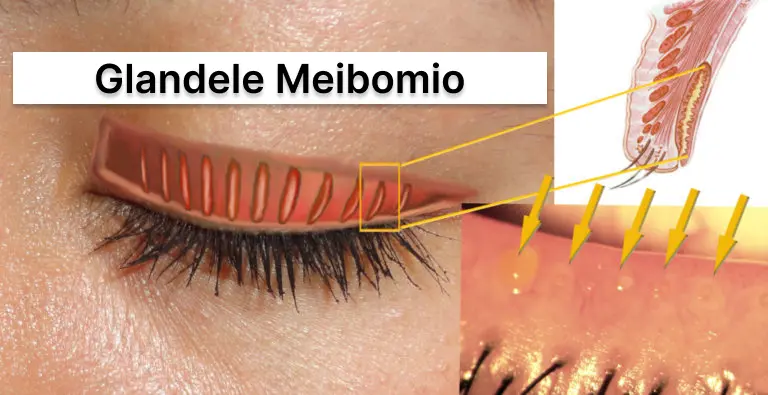
A chalazion is a chronic, benign inflammation of a meibomian gland (the sebaceous glands located within the eyelid).
It presents as a round, initially painless lump, located in the eyelid (upper or lower). It occurs when the gland duct becomes blocked and lipid secretions accumulate.
Although it initially resembles a stye (hordeolum), unlike a stye, it:
• is not infectious;
• does not cause acute pain (except occasionally in the early stages);
• persists longer and tends to become organized into a cyst.
Causes and contributing factors:
• Obstruction of the meibomian gland duct;
• Chronic blepharitis;
• Ocular rosacea;
• Poor eyelid hygiene;
Symptoms
• Round, firm lump on the eyelid;
• Mild local sensitivity at first, but usually painless;
• Slight redness of the eyelid;
• In larger cases, it may press on the cornea and cause blurred vision.
Therapeutic approach
1. Local measures
• Warm compresses (10–15 minutes, 2–3 times/day) to liquefy the secretions;
• Gentle eyelid massageto promote drainage;
• Eye hygiene using eye wipes or special solutions with therapeutic properties.
2. Medication
• Antibiotic/anti-inflammatory drops or ointments if inflammation or secondary infection is present, only as recommended by an ophthalmologist;
• In cases of recurrent chalazion, the doctor may recommend systemic antibiotic treatment.
3. Medical procedures performed only by an ophthalmologist:
• Local injection of anti-inflammatory substances (corticosteroids) to reduce inflammation;
• Minor surgical excision – performed by an ophthalmologist when the lump persists and does not respond to conservative methods.
Prognosis
A chalazion is not dangerous, but it can be cosmetically and functionally bothersome. With the correct approach, most cases resolve, although some may recur, especially in patients with chronic blepharitis or rosacea.