Diabetes mellitus, over the course of the disease, can cause numerous chronic complications. One of the most serious is diabetic retinopathy, which, if not properly monitored and treated, can lead to severe vision loss and, in the most advanced cases, blindness.
Diabetic retinopathy, along with age-related macular degeneration, is one of the leading causes of blindness among adults in Western countries.
Risk factors
The duration of diabetes and poor blood glucose control are essential factors both in the development of diabetic retinopathy and in the speed of its progression. For this reason, careful blood glucose control is fundamental:
• delays the onset of the disease;
• slows the worsening of ocular complications.
Equally important is regular fundus examination, to detect any early retinal lesions in time.
NORMAL FUNDUS

Classification
Diabetic retinopathy has two main forms:
• Non-proliferative – occurs in the early stages, with varying severity (mild, moderate, or severe).
1. Fundus photographs in mild non-proliferative diabetic retinopathy
2. Fundus photographs in severe non-proliferative diabetic retinopathy
• Proliferative – an advanced and disabling form.
1. Fundus photographs in severe proliferative diabetic retinopathy
If non-proliferative forms are not diagnosed and treated in time, they may progress to the proliferative form, which over time leads to vision loss.


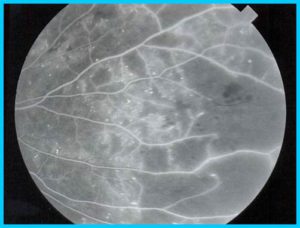
Disease mechanism
Hyperglycemia damages the blood vessels of the retina, causing:
- the appearance of microaneurysms and microhemorrhages;
- changes in vascular caliber, with a risk of thrombosis.
These processes have two major consequences:
1. Disruption of the blood-retinal barrier, causing fluid and exudate accumulation in the retina;
2. Reduced retinal perfusion, with the development of ischemic areas, sometimes extensive.
Ischemia stimulates the formation of new blood vessels (neovascularization), characteristic of the proliferative form.
Diabetic retinal hypoperfusion leads to ischemic areas. As a compensatory mechanism, the retina develops new blood vessels to meet its nutritional needs, but these vessels are fragile and prone to rupture. Their rupture causes hemorrhages and may lead to serious complications, including vitreous hemorrhages or retinal detachments, with a major risk of vision loss.
Regular ophthalmological monitoring of patients with diabetes mellitus is essential for the early detection of retinal complications and the initiation of appropriate treatment. In addition to metabolic control measures and specific therapies recommended by the ophthalmologist, supplements containing antioxidants and nutrients for eye health, such as Intravit and Intravit Forte, may have an adjuvant role by restoring the vascular barrier, inhibiting neovascularization, and slowing the degenerative processes characteristic of diabetic retinopathy