What is AMD?
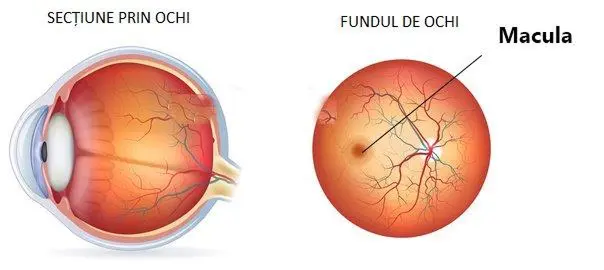
Age-related macular degeneration (AMD) is a degenerative retinal disease that predominantly affects the macula—the central area responsible for detailed vision and accurate color perception.
In developed countries, AMD is the leading cause of severe vision loss in people over 55. The disease usually begins in one eye but may eventually affect the other eye as well.
The role of the macula
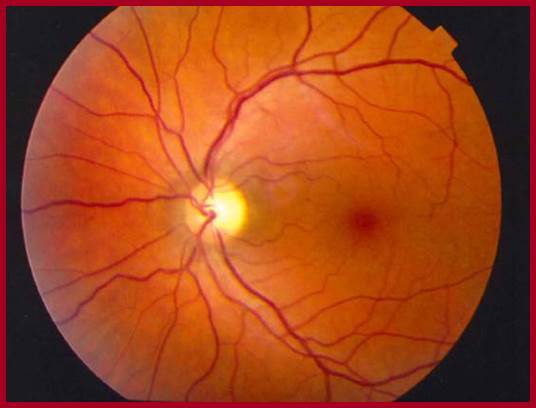
The macula provides precise vision for seeing details and recognizing subtle color variations. When the macula is affected by degenerative processes, central vision is severely impaired. In advanced stages, patients may perceive a dark spot (scotoma) in the center of their visual field. However, peripheral vision remains partially preserved, allowing spatial orientation, but with more faded colors and less distinct contours.
Forms of AMD
There are two main forms of macular degeneration:
• Atrophic (dry)
• Exudative (wet)
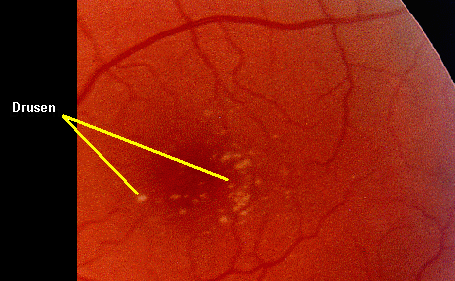
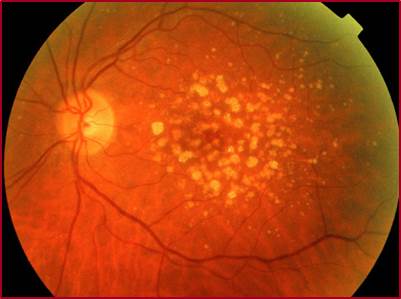
Both forms are preceded by an early stage characterized by the appearance of yellowish deposits called drusen in the macula. From this stage, the disease may progress to the atrophic or exudative form, although in some cases it may remain stable.
Atrophic (dry) AMD
The atrophic form progresses slowly. In advanced stages, progressive damage to the retinal cells in the macula leads to loss of central vision. This loss of central vision is gradual and proportional to the extent of the lesions.
Atrophic or dry AMD
Exudative (wet) AMD
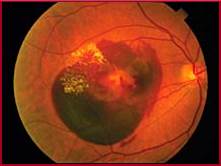
The exudative form is much more aggressive and may develop even in the setting of the atrophic form. In this case, reduced oxygen and nutrient supply stimulates the formation of abnormal blood vessels—called neovessels—that grow into the retina.
These abnormal vessels have fragile, permeable walls, causing plasma leakage and hemorrhages, with severe impairment of central vision.
Exudative wet AMD
Symptoms
Clinical manifestations vary depending on the stage and include:
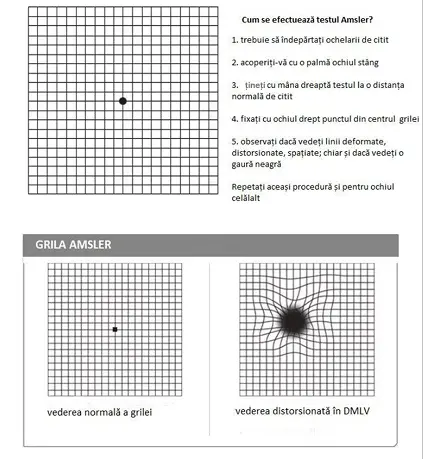
• distorted vision (metamorphopsia) – for example, straight lines appear wavy;


Causes and risk factors
AMD is a multifactorial condition caused by the interaction of genetic, metabolic, and environmental factors.
Non-modifiable risk factors:
• Age – prevalence and severity increase significantly with advancing age;
• Genetics – for example, first-degree relatives of a patient with AMD have a threefold higher risk of developing the disease;
• Sex – some studies show a higher frequency in women;
• Ethnicity – prevalence is higher among Caucasian populations, particularly for the exudative form.
Modifiable risk factors:
• Smoking – the main risk factor, by inducing oxidative stress and stimulating neovascularization;
• Excessive alcohol consumption – associated with a higher risk of developing AMD;
• Unbalanced diet – a diet high in animal fats and low in vegetables and antioxidants may promote AMD progression;
• Obesity – associated with more rapid AMD progression;
• Sedentary lifestyle – associated with a higher risk of disease progression;
• Excessive exposure to sunlight – light has a photo-oxidative effect on the macula; protection with sunglasses is recommended.
Management and monitoring
Patients diagnosed with AMD should undergo regular ophthalmological examinations. Periodic examinations are essential for early detection of progression and prompt initiation of treatment.
Paradoxically, the exudative form—the most severe form—can now be treated with modern therapies, such as intravitreal injections, which may slow disease progression. Therefore, regular ophthalmological checkups are crucial.
Patients can also use simple self-monitoring methods, such as the Amsler test, to detect metamorphopsia and other suggestive symptoms at an early stage, but an ophthalmological examination remains essential.
Prevention
The main way to reduce the occurrence of macular degeneration remains prevention, which can be achieved by reducing risk factors, namely:
• quitting smoking;
• limiting alcohol consumption (red wine, in moderate amounts, may have a protective effect);
• adopting a diet rich in fruits and vegetables, reducing red meat consumption and preferring white meat and fish;
• maintaining an optimal body weight and engaging in regular physical activity;
• protecting the eyes from solar radiation with good-quality sunglasses and hats, starting in youth.
The role of antioxidant supplements
In addition to preventive measures, antioxidant-based supplements may play an important role in protecting the macula. They help neutralize free radicals, reduce oxidative and photo-oxidative stress, and support retinal metabolism.
Thus, products specially formulated for eye health, such as Intravit and Intravit Forte, may have an adjunctive role in slowing the degenerative progression of AMD, while supplements such as Mioret contribute to proper retinal nutrition, supporting the maintenance of visual function over the long term.